Nine of Swords
Number IX · Element Air · Correspondence Second decan of Gemini
Upright: anxiety, insomnia, catastrophic thinking, mental torment
Reversed: coming out of anxiety, seeking help, worries easing
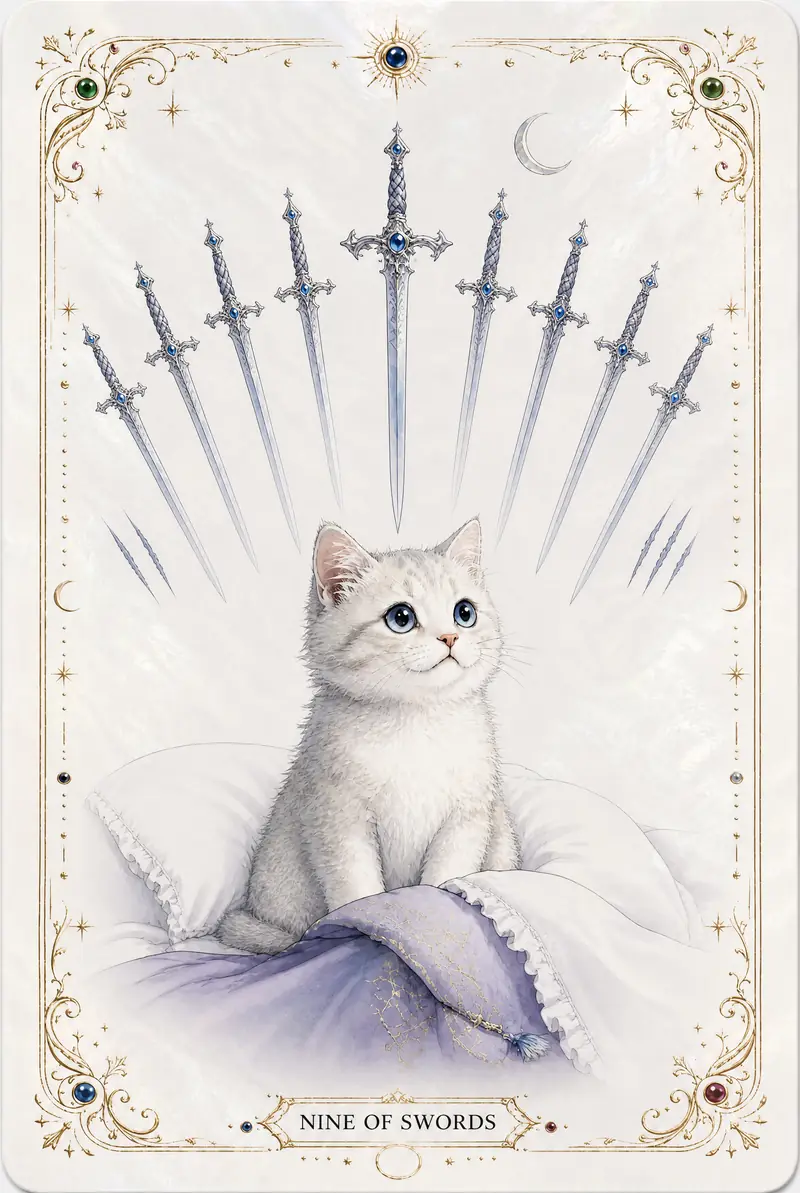
The worst endings the mind plays out at three in the morning are often more frightening than reality itself.
The image
A figure sits up in bed in the dead of night with both hands over her face, a classic posture of anguish or despair. Nine swords hang in a neat row on the wall above the bed. The bed is carved with a scene of fighting or injury, hinting at what the nightmare is about.
Core meaning
- The number nine is about being one step short of the end, often with tension and loneliness (see Numbers in Tarot). In the Swords suit, that tension takes its most naked form: lying awake in the small hours with a mind that will not stop going over the worst possibilities.
- This is the Swords card most typical of anxiety: worry, nightmares, catastrophic thinking, rumination. Note that much of this suffering happens in the head and does not necessarily correspond to anything that bad actually happening. In the picture, all nine swords hang on the wall; not one of them has actually pierced the figure.
- Given the suit's link with thought, the card shows exactly how thinking itself becomes a tool of self-torment. The imagined worst case is often more frightening than what really happens. This is the psychological form of the nine's tension of being one step short.
- She covers her face instead of looking at the swords on the wall. This suggests that she cannot, and does not want to, face the thoughts that frighten her right now. She is simply caught going around and around in her feelings.
- To be honest about it, this is one of the few cards in the deck whose difficulty does not need to be played down. The Nine of Swords is not a small worry. The picture shows a considerable degree of mental suffering, and if it keeps appearing in readings it deserves to be taken seriously instead of passed over quickly.
- Common concrete situations: tossing and turning the night before a deadline, the days of waiting for test results while ill, imagining the worst ending over and over after a rift opens in a relationship. The anxiety this card describes usually has a specific trigger, something whose outcome is still being awaited.
- The fight scene carved on the bed connects the figure's private pain with an older, more archetypal kind of harm. It suggests the fear does not come entirely out of the present situation and may be tied to earlier trauma inferred.
- The card also points to something easy to overlook: long-term anxiety and insomnia wear down the body in their own right. The Nine of Swords is not only a psychological card; it is closely tied to sleep and physical health.
- Pollack points to a detail in the picture that is easy to miss: the nine swords do not actually pierce her back. They float in the black air above her. This detail supports a reading in which the pain of the Nine of Swords is not necessarily happening to the querent. Often it is the pain of bearing what a loved one is going through.
- Pollack places the Nine of Swords within a longer psychological process. The Queen of Swords frees herself by turning grief into wisdom, and the Three of Swords speaks of the calm that follows accepting pain. The Nine shows the moment of collapse in between, when the pain has been neither transformed nor accepted. The card sits at the hardest stretch of this emotional arc.
- Sitting right on the edge of the bed is a key detail. Half awake and half asleep, the figure is at a fork in the road: lie back down and get through another night of self-deception, or sit up, open her eyes, and face a harsher but truer reality. The anxiety of the Nine of Swords is to some extent the tug-of-war itself, between continuing to pretend and finally facing things.
- A further caution: the thoughts that keep tormenting a person are not necessarily just imagined. Often they come from a real situation that already exists, and avoidance only postpones the moment of realizing it; it does not make it go away. This does not contradict the reading that most worry is people scaring themselves. In an actual reading, use the specific situation to judge whether something really is closing in or whether pure catastrophic imagination is doing the work.
- In money questions, the anxiety of the Nine of Swords is often very specific: worry about being able to pay debts, financial pressure magnified by sleepless nights. The practical advice is to turn the worry into lists. List debts and expected income, then list all the ways to increase income or cut spending. Putting floating anxiety down on paper through concrete action is one of the rare actionable responses this card offers.
- In health questions, the card is a reminder that the physical toll of long-term anxiety is not just a vague matter of sleeping badly. Headaches and tension or discomfort in the neck and upper back are the body areas this card most often corresponds to, and they are worth mentioning specifically in a reading.
- The pattern on the quilt also hides two layers of symbolism. Part of it is Rosicrucian imagery, standing for awakening; part of it shows the twelve zodiac signs, standing for occult knowledge. When the figure finally lowers her hands and looks squarely at the quilt, she is about to face many truths, harsh as they may be.
- The wooden bed frame has its own meaning: thoughts turn into reality. The thoughts tormenting her, whether harsh or sweet, all come from her real situation and will slowly take shape in reality. Avoidance only delays seeing them clearly; it will not make them disappear.
Reversed
- Overdone: The dreamer moves to the top of the picture. On one hand this puts more weight on the anxiety and fear being magnified. On the other, it may be reversed: the querent's own words and actions may be making others uneasy or even afraid, so that the position of fear has switched.
- Turned inward: All nine swords turn and point to one side, giving off a strong defensiveness, even hostility, that keeps people from coming close. The blanket that covered her slips off, meaning the old sense of security and support has been lost, and for now the querent mostly has to get through on their own.
- Turned inward: The atmosphere is full of mutual suspicion, and it is hard to trust or cooperate. Staying alert and keeping out of other people's business is safer for now. It may also be that past words and actions, plus rumors, have already given the querent a bad reputation, and even with a sincere wish to change, regaining trust will take time.
- Blocked: Fear limits thinking and action and leaves the person stuck in the situation, not daring to go after a good opportunity even when one appears.
- Turned inward: Seeing clearly what you are really afraid of often solves half the problem, and only by facing a weakness can you truly get past it. Stay rational, too, and do not let feelings sweep you away. Some worries are self-generated, and the person is not actually powerless. Reasonable caution and a healthy amount of doubt are actually good things here: they bring the details into focus and help separate real risks from imagined fears. This is one of the common positive turns of the Nine of Swords reversed inferred.
- Turned inward: In money questions, the reversal sometimes means "the answer already came in a dream." The direction the subconscious offers deserves to be taken seriously, and the querent can try adjusting spending or actions along lines that surfaced in sleep. In health questions, the reversal usually means a stretch of insomnia and waking easily has passed, sleep is improving, and daytime worries can start to be set aside at night.
Correspondences
Number nine, see Numbers in Tarot. Element: Air. Astrology: second decan of Gemini, see Astrological Correspondences. In the Golden Dawn system its esoteric title is "Lord of Despair and Cruelty"; see Esoteric Titles.
Views from different traditions
The Crowley-Thoth system names this card "Cruelty," leaning toward suffering caused by cruelty from outside or from other people. The Waite picture focuses more on the person's own mental torment, with a more ambiguous source of pain that is more likely self-made disputed. In actual readings the two approaches can complement each other, helping judge whether the anxiety comes more from the outside situation or from inner imagination.
In traditional divination texts, the Nine of Swords reversed is also often associated with disgrace and guilt, and sometimes even with imprisonment or isolation.