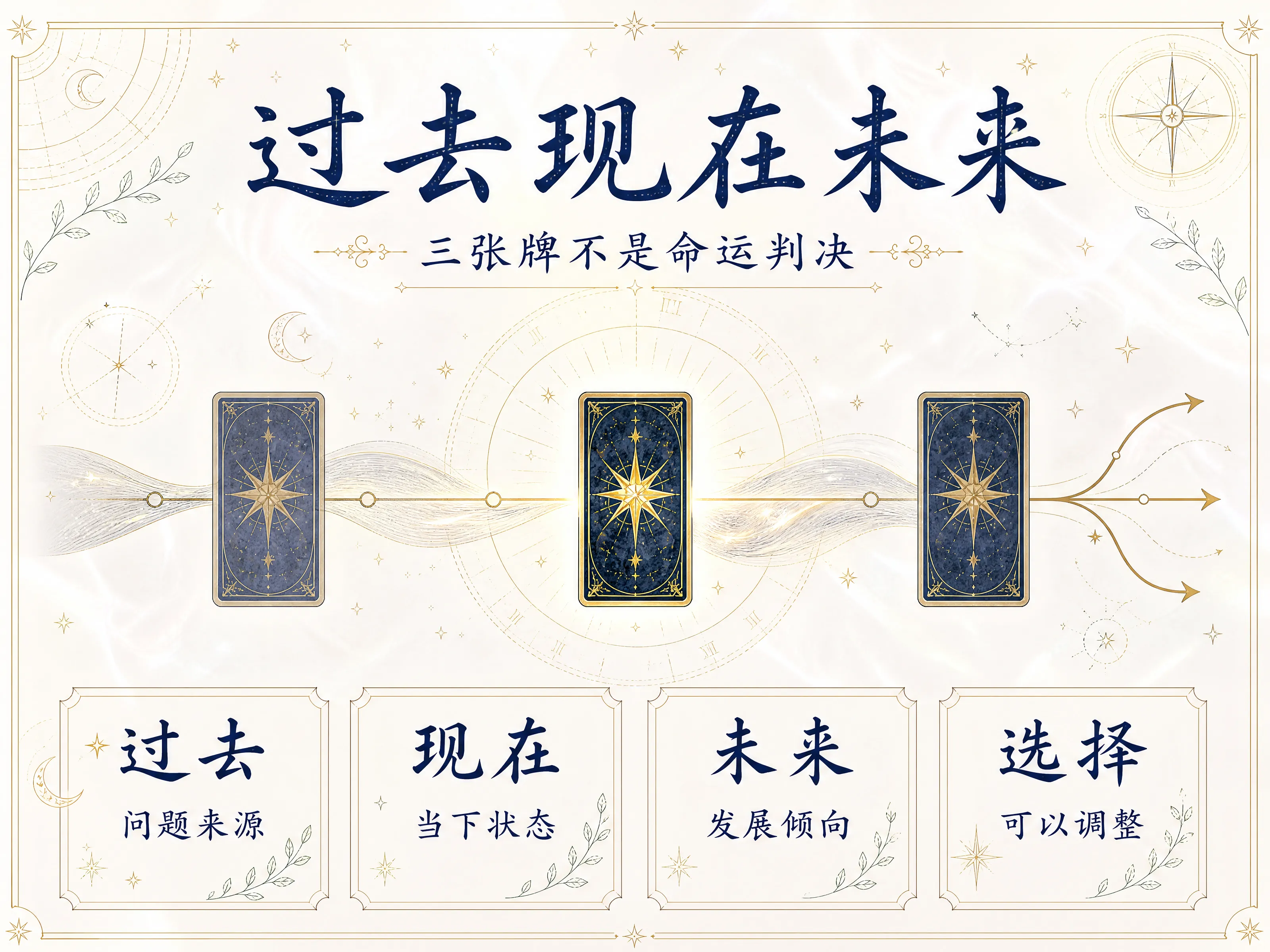
It looks simple, and it's the easiest spread to misread. Many people treat the third card as the final outcome, as if a single card has stamped the future. In fact this spread doesn't read a verdict — it reads the flow of time in one matter.
The past isn't settling old scores
The past position isn't about who was right or wrong. It's more like the source of the question: why did this develop the way it did? What old experiences, choices or emotions are still affecting you? The Five of Cups here may not be asking you to wallow in regret, but reminding you that some loss hasn't truly been processed yet.
The present is the most important position
The present is the centre of the spread, because the future doesn't come from nowhere — it usually grows out of your current state. If the Two of Swords appears here, you may be in a phase of avoidance or refusing to face the facts. That present naturally shapes the tendency the third card shows.
The future is a tendency, not a lock
The future position is more like "if things continue in this state, what is most likely to appear." It isn't unchangeable; it's pointing out that a trend is forming. If the Tower appears, it doesn't mean inevitable collapse — it may be telling you the current structure is already unstable, and the sooner you face it, the less you'll suffer passively.
A better way to read it
Don't ask "will the future be good?" Ask "what from the past shaped me, what state am I in now, and where does this lead if it continues?" Read this way, the third card stops being a threat and becomes a reminder. You're not someone chased by the future — you can adjust the path that's forming, starting from now.