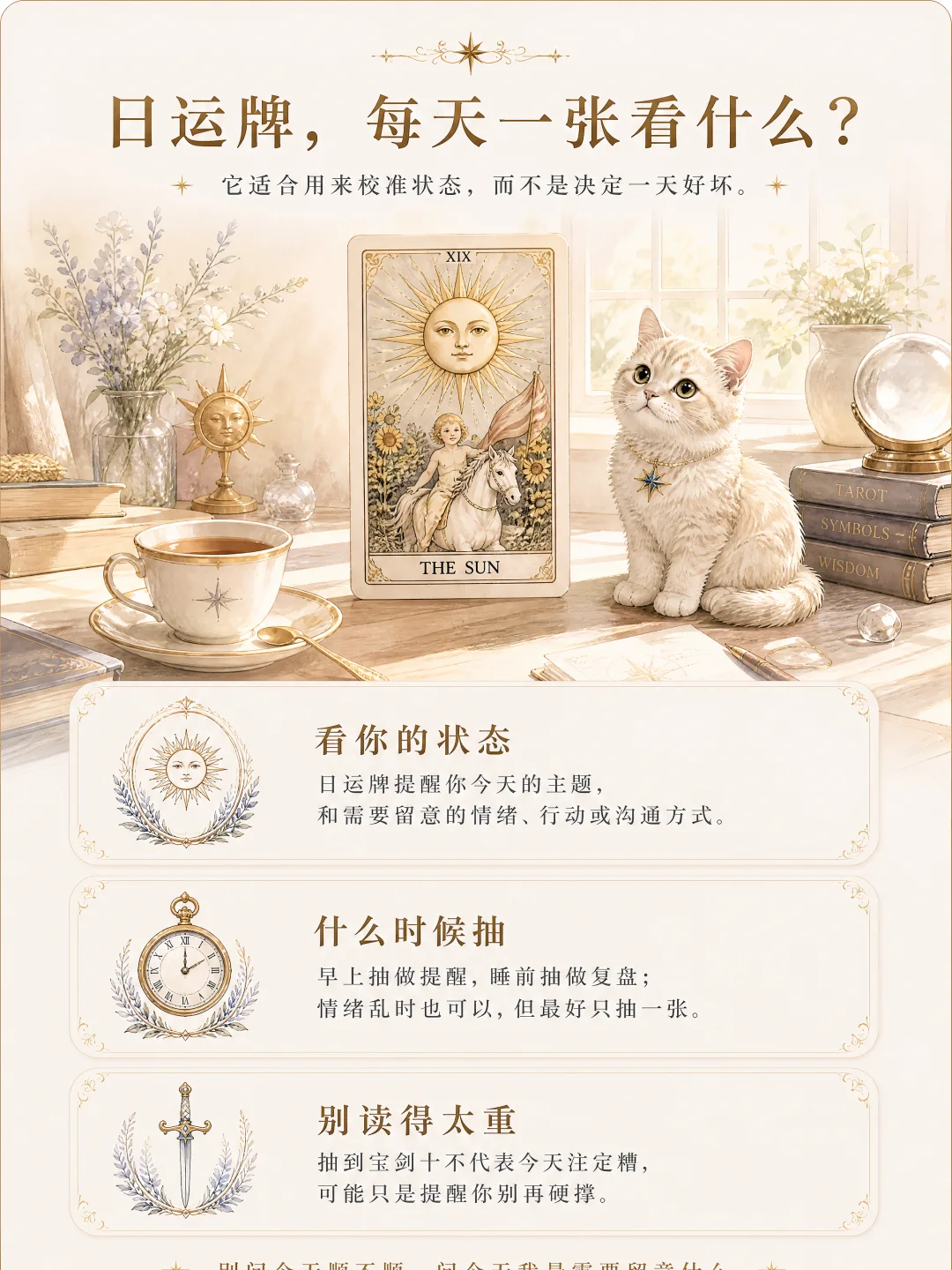
A daily card isn't really for predicting every detail of your day. It's for seeing your own state before the day begins — like a glass of water in the morning that slows you down enough to ask: what awareness do I want to carry into today?
What a daily card looks at
You usually draw just one. It can point to the theme of the day, or to an emotion, a way of acting, or a communication habit worth watching. The Chariot doesn't promise a big event — it might be reminding you to hold your pace more clearly today. The Moon isn't necessarily bad — it may say you're easily swayed by uncertainty and need to separate fact from imagination.
When to draw it
Morning draws work as a reminder for the day. Bedtime draws work as a review of it. You can draw when your feelings are tangled too, but keep it to one card — you're not looking for every answer at once, just a point to observe from.
Don't read it too heavily
If you draw the Ten of Swords first thing, it doesn't mean the day is doomed. It might simply say you're already exhausted and shouldn't keep pushing, or that a line of thought has reached its end. The danger is reading a daily card as "today's fortune." Once you do, you start waiting for things to happen instead of caring for yourself.
A better question
Instead of "will today go smoothly," ask "what do I most need to notice today." It's gentler and more powerful. A daily card isn't a notice from fate — it's a small sticky note on the door of your day, reminding you how to meet life a little more steadily.