Nine of Wands
Number IX · Element Fire · Correspondence Second decan of Sagittarius
Upright: perseverance, vigilance, pressing on while wounded, last reserves of will
Reversed: exhaustion and giving up, excessive guardedness, hidden fatigue
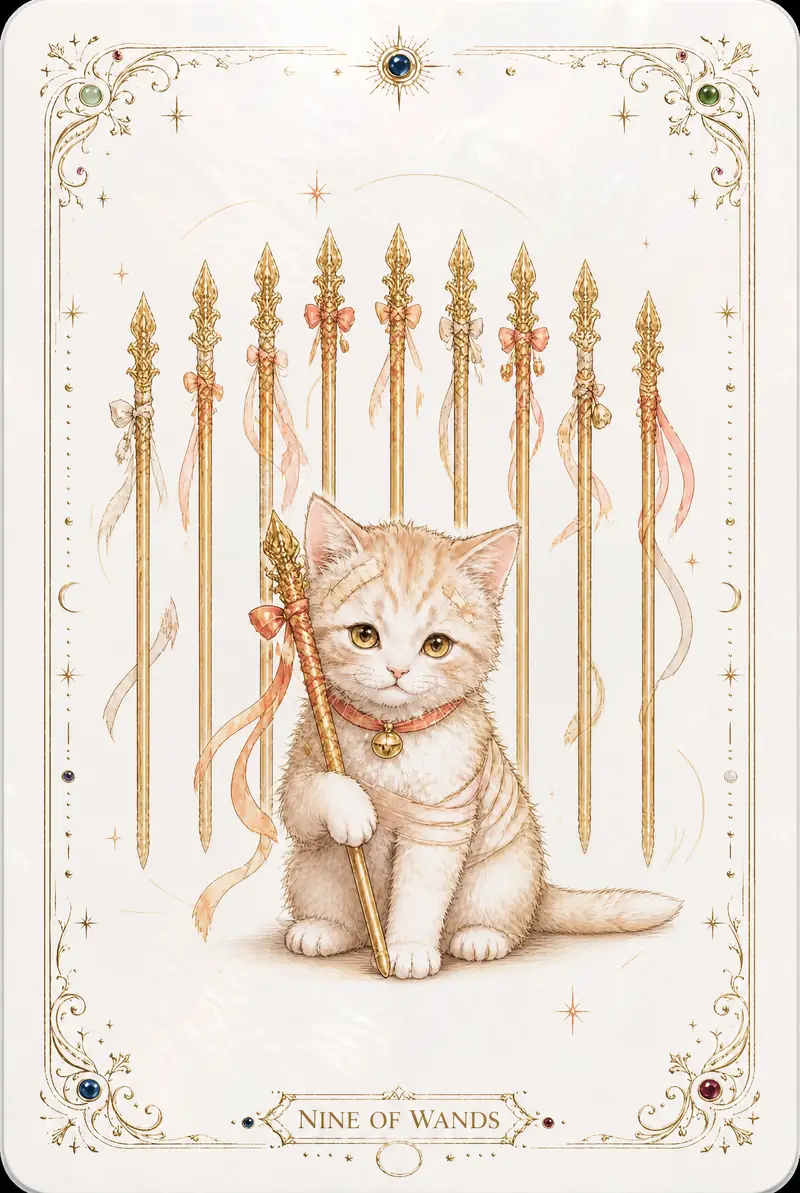
A bandage around the head, still standing, still watching the direction the trouble came from.
The image
A man with a bandaged head leans on one wand. Behind him the other eight wands stand in a row like a fence. He glances back warily, as if guarding against the next attack (Rider-Waite-Smith).
Core meaning
- The "nearly complete" quality of the number nine shows up in Wands as how to respond to problems and what compromises solving them requires. Fire suggests great strength, physical stamina and a sharp mind, but emotionally, the Wands appetite for struggle can also trap a person in a pattern of repeated conflict.
- Getting this far has clearly cost something (the bandage on the head), but the man has not fallen. He chooses to fight back instead of suffering in silence. The act of fighting has built up his strength, which is why the picture shows a muscular man with an alert gaze.
- Rachel Pollack draws particular attention to his stiff posture: the whole body is tense, the shoulders hunched, and with the bandage on his head, this is not a whole person. Out of necessity or habit he has shut out awareness of any life beyond the conflict. Now he looks only for the next battle and sees only enemies, sometimes even after the enemy has surrendered.
- The backward glance shows that experience has taught him the danger may not be over. This vigilance does not necessarily match a real threat in the present. It is more an instinctive reaction left by past strain.
- The wands behind him form a line of defense, and he guards it alone, without the support of the crowd that surrounds the Six of Wands. Of all the Wands, this card carries the strongest sense of isolation.
- It is a reminder that only the last step remains and that the effort built up so far should not be abandoned at this point. It also asks you to admit your own tiredness, instead of pushing through to the end without noticing it.
- This vigilance cuts both ways. Even if the current partner is actually good, carrying the wounds of a past relationship into the new one unchanged, testing the new person too much and staying guarded at every turn, can backfire and lose a relationship that could have been built well. The card reminds the querent that vigilance needs limits and should not harden wholesale into habit.
- Money: upright, the card points to a stage of reassessing financial decisions carefully. If there has been a painful lesson from a past investment, this card is about learning from it and not repeating the mistake.
- Health: upright, it is often linked with health problems built up from long-term overwork and exhaustion. It is a reminder to start deliberately building up physical reserves and slowing down, instead of pushing on until you drop.
- The wand he grips also symbolizes a tough vitality that can rally again after repeated blows: however many setbacks there have been, he can still stand back up. The green boots and the plants at his feet echo a peaceful present and having both feet on the ground, and they are a reminder that this calm was hard won and worth valuing.
Reversed
- The hill now rises above the figure, and the sense of outside obstacles grows denser. The fence of wands looks more like a wall that traps and cuts him off than a line of defense that protects him (reading from the image).
- Turning to look back the way he came, wanting to retreat to familiar ground, shows that the fighting spirit that carried him this far is loosening. The resolve to defend is more fragile than it looks (reading from the image).
- Holding your position does carry a caution earned through experience, but taken too far it turns into refusing to hear any advice, which only cuts you off further from the world (negative meaning).
- When you are already worn out, forcing yourself on is not always the best choice. Withdrawing in time or adjusting the goal is often wiser than gritting your teeth and holding on (negative meaning / opposite meaning).
- It may also be that you have reached the point where it is time to let go. If there has been no progress for a long time, rather than holding the line where you stand, break the deadlock yourself, or first give yourself a real breather and then start again (opposite meaning).
- For money, the reversal often means a long struggle to make ends meet that is close to its limit. There is no need to keep fighting blindly at this point; a temporary rest can help you get clear on your direction and rekindle enthusiasm for the future. For health, it is usually the result of trying to do too many things at once for too long and wearing yourself out. Simplify your lifestyle on purpose and set aside a stretch of time to recover properly.
Correspondences
The number nine: the "nearly complete" stage in Numbers in Tarot. Astrologically, the second decan of Sagittarius; see Astrological Correspondences. In the Golden Dawn system, the card's esoteric title is "Lord of Great Strength"; see Esoteric Titles.
Views from different traditions
The Thoth system calls this card "Strength," emphasizing a tough will that holds up even after great strain. This and the wounded, watchful figure of the Waite image are two expressions of the same tension. Note that the name is easily confused with the Major Arcana card Strength; the two are cards of entirely different levels [uncertain: sources disagree on whether the shared name causes real confusion].